When Grandmothers Watched the Sky: Your First Step Into Moon Phase Tracking
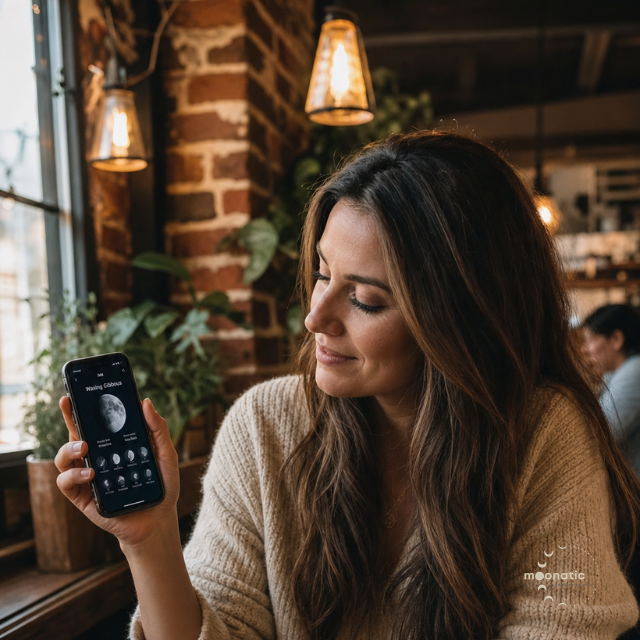
This post is the first in our weekly Modern Witch series, exploring tools that bridge traditional wisdom and everyday technology.
This post may contain affiliate links. If you buy something through a link here, we’ll get a kickback at no extra cost to you. Moonatic is entirely supported by readers like you and we only recommend products we’ve tested and love. Thank you for your support!
A movie, the aunts, and the moon
If you're anything like me, your earliest memories of the moon are tangled up with something or someone older and wiser. For me, it was the Practical Magic movie — remember Sandra Bullock standing at the window in her dressing gown, tilting her head toward the sky? And her aunts? I'm sure they never consulted a calendar. They just knew. When to cut their hair (yes, really). When to make the midnight margaritas or sow beans.
They would have laughed at the word 'witch' and then poured you another glass of those margaritas. They were keepers of something — a thread of lunar knowledge that stretches back thousands of years, long before we had words like biodynamic or circadian rhythm to dress it up in respectable syllables.
I think about that movie often when I open My Moon Phase on my phone. The irony isn't lost on me: all the sky-wisdom, distilled into an app icon nestled between my banking app and an embarrassing number of unread WhatsApp messages. And yet — it works. Not as a replacement for that quiet, embodied knowing that those aunts carried, but as a doorway back to it. A beginning.
This post is for anyone standing at that doorway.
Why track the moon at all?
Before we talk about the app, let's talk about the why — because downloading yet another app without understanding its purpose is just digital clutter, and we have enough of that.
The moon has governed planting calendars, fishing schedules, and ceremonial life across virtually every culture on earth. Here in Provence, the calendrier lunaire still hangs in organic produce stores. Biodynamic farmers time their harvests by it. Herbalists know that root medicines are best gathered during a descending moon, when the plant's energy draws downward. Even modern studies — the kind my physicist husband reluctantly admits are "not entirely without merit" — suggest correlations between lunar cycles and sleep patterns, mood, and biological rhythms.
You don't need to believe the moon controls your destiny. You just need to notice it. And noticing, as any witch worth her salt will tell you, is where all magic begins.
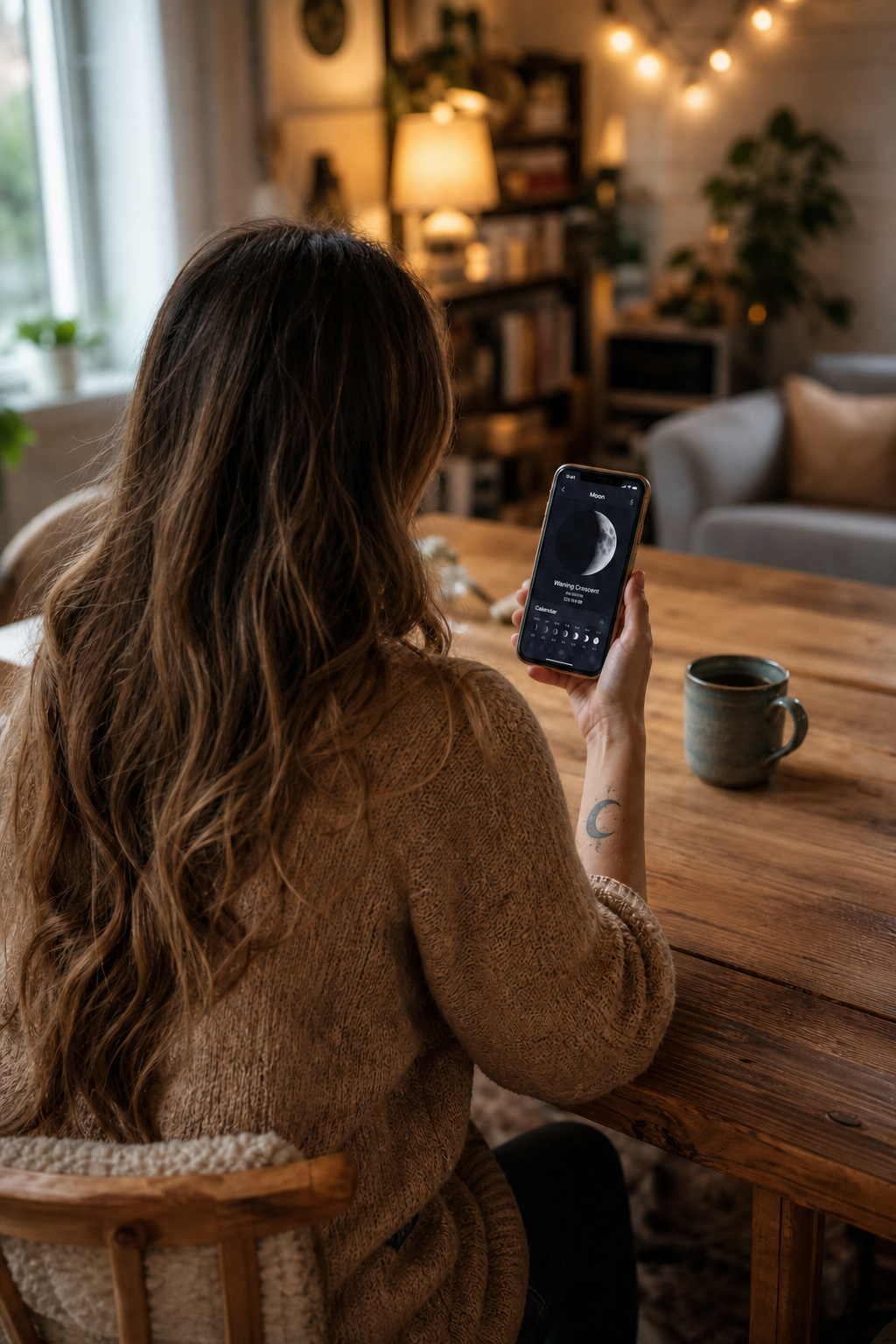
My Moon Phase: a gentle place to start
There are dozens of moon-tracking apps available, from the astrology-heavy to the brutally scientific. I've tried more than I care to admit. But for beginners — and for those who simply want something beautiful and functional without feeling like they need a degree in astrophysics — My Moon Phase remains my favourite recommendation.
It's available on both iOS and Android, and here's what makes it special:
Clean, visual interface — The home screen shows you tonight's moon in gorgeous detail. No clutter, no pop-ups demanding you rate the app before you've even used it. Just the moon, luminous and immediate.
Daily moon phase and illumination — At a glance, you can see whether you're in a waxing crescent, first quarter, full moon, or waning gibbous. The percentage of illumination is displayed clearly, which is surprisingly useful once you start working with it.
Moonrise and moonset times — Localised to your exact position. This alone makes it worth having. Knowing when the moon will be visible in your sky transforms the experience from abstract to personal.
Moon calendar view — A monthly overview showing each day's phase. I use this more than anything else — it's become my quiet planning tool for everything from garden work to journaling.
Notifications — You can set reminders for full moons, new moons, or specific phases. I keep a gentle full moon alert, which has become a small ritual in itself: the phone hums, I look up, I pause.
The free version covers everything a beginner needs. There is a premium tier with additional features like golden hour photography times and detailed eclipse data, but honestly, start with the free version and see how the practice settles into your life before spending anything.
How to actually use it (a practical guide for the lunar-curious)
Right, so you've downloaded the app. Now what? Here's how I'd suggest easing in — no pressure, no rigid schedules. Think of it less as a programme and more as a conversation.
Week one: Just observe. Open the app each evening. Look at the phase. Then — and this is the important part — go outside and look at the actual sky. Match what you see on the screen to what hangs above your rooftop. This sounds almost absurdly simple, but it's the foundation of everything. You are rebuilding a relationship with the sky that electric lighting and busy lives have quietly severed.
Week two: Start a moon journal (or buy one, this one is my fav) Nothing fancy — a notebook, the back of an envelope, a notes app. Jot down the phase and one sentence about how you feel. Sleep well? Restless? Creative? Irritable? After a full cycle (29.5 days), patterns may begin to whisper.
Week three: Align one activity. Choose something — planting seeds, setting intentions, deep-cleaning the house, beginning a new project — and try timing it with the moon. New moons are traditionally for beginnings and intention-setting. Full moons for culmination, celebration, and release. Waning moons for clearing out, both physically and emotionally. There's no wrong way to do this. You are experimenting, not performing a ceremony (unless you want to, in which case, light a candle and go for it).
Week four: Share what you've noticed. Tell someone. A friend, a partner, your slightly sceptical sister. Or tell us — because this kind of knowledge has always grown best in community, passed from hand to hand like seeds.
How to actually use it (a practical guide for the lunar-curious)
Right, so you've downloaded the app. Now what? Here's how I'd suggest easing in — no pressure, no rigid schedules. Think of it less as a programme and more as a conversation.
Week one: Just observe. Open the app each evening. Look at the phase. Then — and this is the important part — go outside and look at the actual sky. Match what you see on the screen to what hangs above your rooftop. This sounds almost absurdly simple, but it's the foundation of everything. You are rebuilding a relationship with the sky that electric lighting and busy lives have quietly severed.
Week two: Start a moon journal. Nothing fancy — a notebook, the back of an envelope, a notes app. Jot down the phase and one sentence about how you feel. Sleep well? Restless? Creative? Irritable? After a full cycle (29.5 days), patterns may begin to whisper.
Week three: Align one activity. Choose something — planting seeds, setting intentions, deep-cleaning the house, beginning a new project — and try timing it with the moon. New moons are traditionally for beginnings and intention-setting. Full moons for culmination, celebration, and release. Waning moons for clearing out, both physically and emotionally. There's no wrong way to do this. You are experimenting, not performing a ceremony (unless you want to, in which case, light a candle and go for it).
Week four: Share what you've noticed. Tell someone. A friend, a partner, your slightly sceptical sister. Or tell us — because this kind of knowledge has always grown best in community, passed from hand to hand like seeds.
The thread that doesn't break
Here is what I've come to believe, after years of standing in moonlit gardens with soil under my fingernails and a phone in my pocket: technology doesn't diminish the magic. It simply gives us another way to hold the thread.
Our ancestors didn't need an app because they had a lifetime of watching, a village of women who shared what they saw, and a slower world that left room for the sky. Most of us don't live in that world anymore. But the moon hasn't changed. It still rises, still wanes, still pulls the tides and — whether science has fully explained it or not — still pulls at something in us.
An app like My Moon Phase won't make you a witch. It won't replace the slow, earned wisdom that comes from years of observation. But it will remind you to look up. And looking up, dear reader, is always the first spell.
This is the first post in our Modern Witch weekly series. Next week, we'll explore herb identification apps — because knowing what's growing at your feet is just as important as knowing what's happening above your head. If you'd like these posts delivered to your inbox along with lunar gardening tips and seasonal musings, step into the circle and join our newsletter.