The Overwhelmed Herbalist's Guide to Having an AI Apprentice (Who Never Eats Your Elderberries)
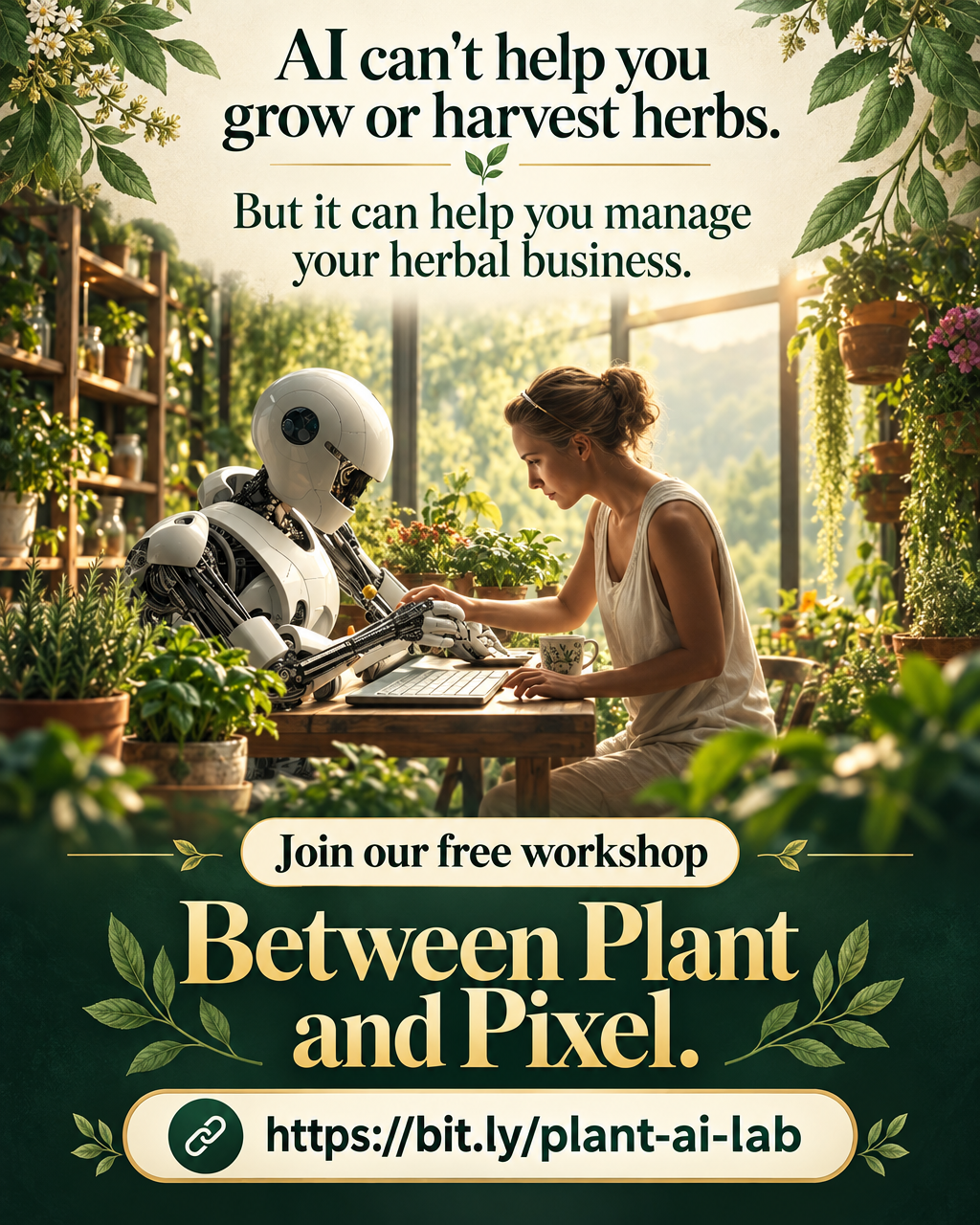
There is a very specific kind of chaos that lives in a one-woman herbal business. I know it because I've watched friends describe it with the slightly glazed eyes of someone who hasn't slept properly since the last new moon. There's the harvest schedule fighting with the school run. The Instagram post half-drafted in the Notes app between client calls. The email newsletter that's been "almost ready" since February. And somewhere, beneath a pile of maceration jars and a sticky note reading "LABELS??", there is a woman who got into this because she loves plants.
Not spreadsheets. Not content calendars. Plants.
The problem isn't passion — you have that in abundance. The problem is the invisible second job that comes bundled with every small business: the marketing, the admin, the endless, relentless words required to sell something as quietly magical as a nettle tincture to someone who has never heard of nettle.
This is where AI walks in. Not to replace your knowledge — it couldn't, even if it tried — but to handle the part of the job that feels like homework.
But Won't It Sound Robotic and Weird?
Oh, it absolutely can. Ask an AI to write a product description for your rose hip elixir with zero guidance and you'll get something that sounds like a pharmaceutical leaflet written by a marketing student who once glanced at a wellness magazine. "Unleash the antioxidant power of Rosa canina for optimal bio-availability!" Bless its little circuits.
But — and this is the part that changes everything — AI is only as good as what you bring to the conversation. When you tell it your story, your customer, your voice? That's when it becomes less robotic intern and more very eager, extremely caffeinated assistant who will stay up at 2am writing product copy so you don't have to.
Think of it like a mortar and pestle: the tool matters, but the herbalist holding it matters more.
Three Ways to Use AI This Week (Without Selling Your Soul or Your Sourcing Ethics)
1. Product Descriptions That Actually Sound Like You
Open ChatGPT (free), Claude (also free to start), or any AI tool you fancy. Then, instead of typing "write a description for my lavender tincture," try this prompt:
"Write a product description for a lavender tincture I make by hand in small batches from organically grown lavender. My customers are busy women who feel overwhelmed and want something gentle for their nervous system. My tone is warm, a little poetic, never clinical. Keep it under 100 words and don't use the word 'optimal'."
That last part — "don't use the word optimal" — is you staying in charge. The AI is the apprentice. You're still the herbalist.
2. Your FAQ Page, Written in 20 Minutes
Every herbalist gets the same questions on repeat. What's the shelf life? Can I take this while breastfeeding? How is this different from what I'd find at the pharmacy? You answer them beautifully, every time, individually, in emails, at 11pm.
Try this: paste five of those questions into an AI and ask it to write a warm, accessible FAQ section for your website in your voice. Then edit it — because you will want to — but you'll be editing instead of starting from scratch, which is a different sport entirely.
3. The Content Calendar You've Been Avoiding
Ask the AI to generate 12 Instagram post ideas based on your product range and the season. You don't have to use them all. You don't have to use any of them. But sometimes just seeing ideas written down is the thing that breaks the blankness.
A Responsible-Use Reminder (From Someone Who Cares About Your Reputation)
AI does not know your plants like you do. It can hallucinate facts. It may confidently tell you something about herb-drug interactions that is simply wrong. Never let AI write your health claims, dosage guidance, or anything medical without your thorough expert review. Your knowledge is not a prompt. It is the irreplaceable thing. The AI is your sous-chef — you are still the one deciding what goes in the pot.
🌿 Try This This Week
Tool: Claude.ai (free tier available)
Claude is, in this writer's humble opinion, the AI that writes most naturally for creative, values-led small businesses. It's less likely to go corporate on you mid-sentence. This week, open a free account and give it one task only: ask it to write three subject lines for your next email newsletter. Tell it your newsletter name, your general topic, and the vibe ("not salesy, not chipper, sort of like a letter from a knowledgeable friend").
Pick the one that made you nod, tweak one word if needed, and call it done. That's it. That's the whole task. Baby steps.
Closing the Laptop (for now)
The goal was never to become a tech person. The goal is still what it always was: more time for the plants, more space for the work you actually love, a business that doesn't quietly eat you alive by September.
AI won't fix everything. It won't harvest your chamomile or hold your client's hand or know that the woman who just ordered her third batch of your sleep tincture probably needs a gentle check-in more than a discount code. That's still you. That will always be you.
But if it can write the product copy while you finish the salve? That's not selling out. That's just a very modern kind of plant magic.
See you next week between the plant and the pixel. 🌱
Got a question about AI tools for your herbal business? Drop it in the community — let's figure it out together.